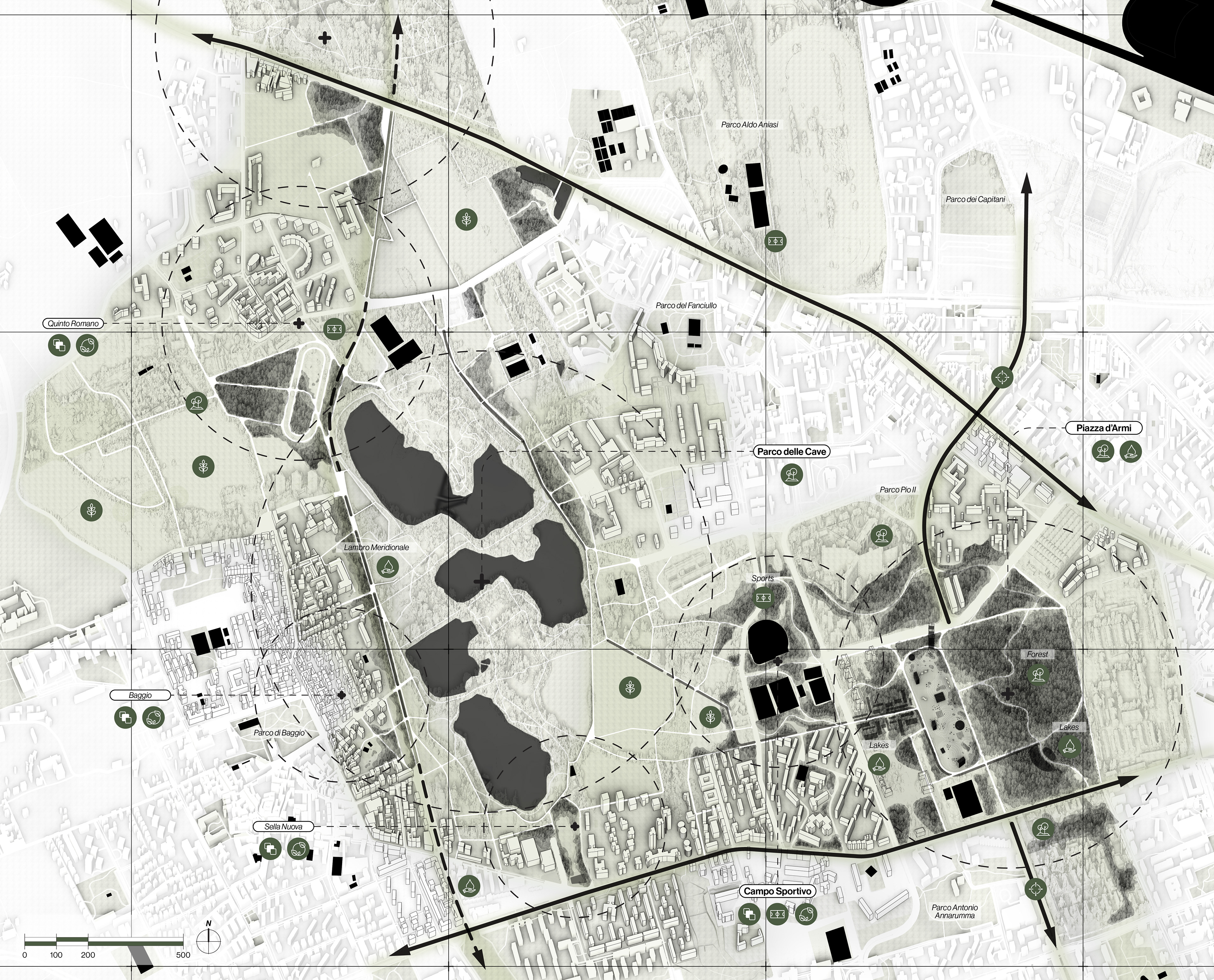
The west area in Milano presents some opportunities for exploring new ways to see the open space systems as a more dynamic area. In this sense, we identified a series of clusters that are present today in the territory and in some ways the interactions between each other are not working properly. Therefore, we explore the territory by proposing three different narratives from different points of view where the problems in the composition of the area start to appear. The first one goes deep in the transitioning areas between cluster defined as ‘ecotones’, the second narrative investigates the human activities, interactions and relationships are working today and finally the last narrative talks about the different aspects of the ecological network (water, soil, biodiversity, etc).
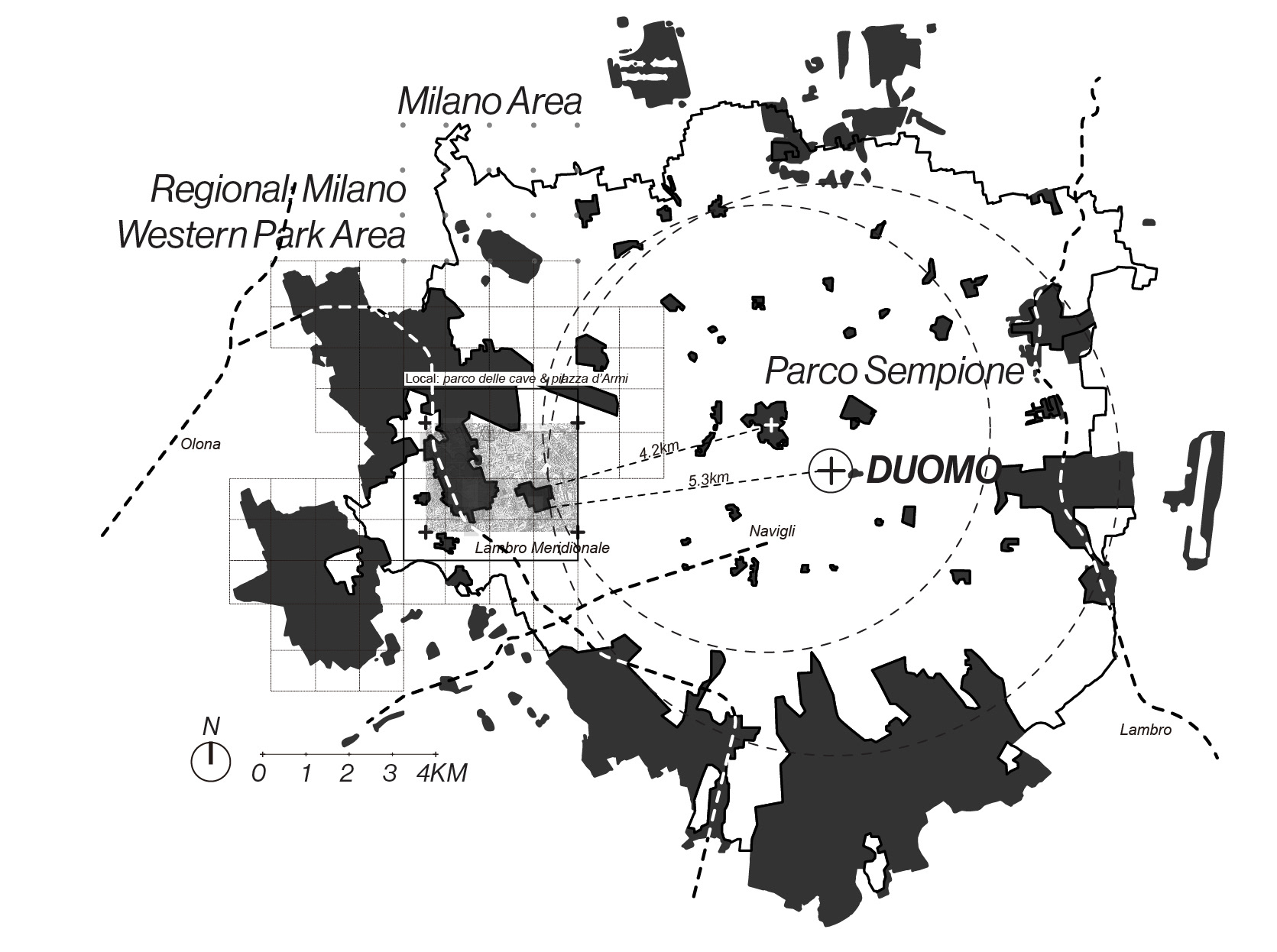
The city of Milan groups services or functions in dense, complex, and convulsive urban sectors. These apparently heterogenous sectors have specific characteristics and a series of singularities that give them coherence and consistency as a “Cluster”. Likewise, from the identification of the Cluster (which may be a military cluster, a residential cluster or sporting activities cluster) of interest, an approach must be proposed from urban renewal (which can be carried out through a landscape project), and thus the urban improvement of our cities must approach from social, economic, and cultural complexity.
The edge landscape (urban ecotone) that we will analyze in the city of Milan presents different scenarios with different protagonists. The system of open parks in the west is one of these scenarios that the city presents and that, in its journey within the complexity of the territory, carries with it some opportunities for improvement in the landscape. On the other hand, in the ecological context, in the park system that ties a series of ecological complexes (such as Piazza d’Armi, Parco delle Cave, and Bosco in Città), various human interventions and relationships have damaged and even disconnected ecological systems that have existed in the territory since the last century.
In this line of thought, the ecological connections (disconnected by the presence of enclosures both inside the parks and on the edges that do not allow a clear connection with urbanization) that still exist in the area of Piazza d’Armi and Parco delle Cave must be enhanced by a project that seeks to break down tangible and non-tangible barriers found in the territory to create a clear connection and leave behind the fragmented city between mono-functional spaces. From the above, the question arises that gives rise to the emergence of a landscape project that reforms and change the area in such a way that the borders define as ecotones could be designed in a way that both anthropogenic and natural factors coexist reciprocally for the improvement of the area.
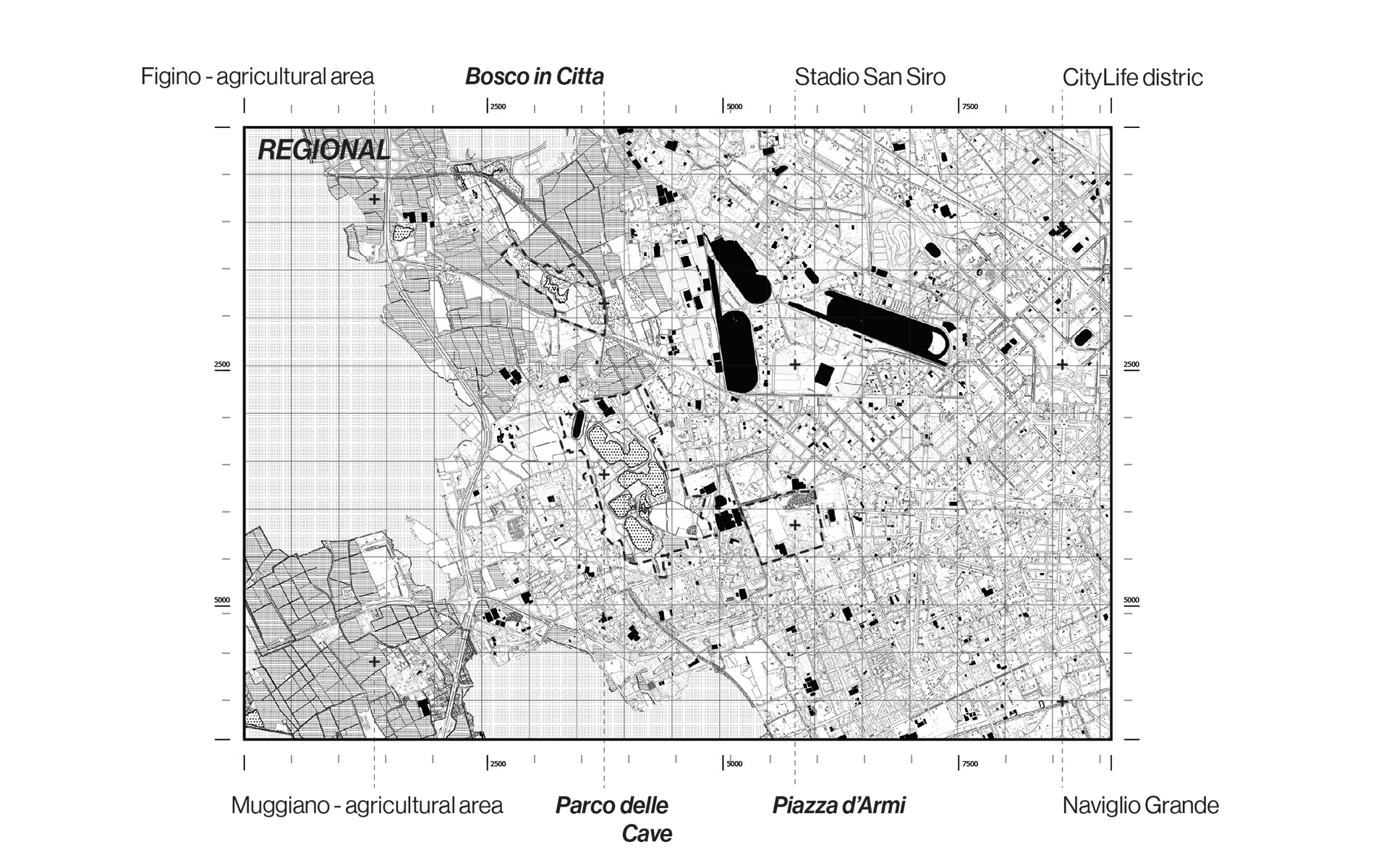
The demographic pressure experienced by Milan and its surrounding areas has seen a significant increase, driven by a complex blend of socio-economic and socio-cultural dynamics. This situation has propelled a marked urban expansion towards the periphery, triggering a series of complex and multifaceted challenges. These challenges are exacerbated by the government’s inability to adequately balance the management of existing spaces with those under development or planned. Especially in the western sector of Milan, several critical issues have been identified, including disputes over land ownership, unplanned and unstructured territorial development, urban sprawl, a lack of effective climate policies, neglect towards the conservation of local biodiversity, and a fragmented and incohesive urban mobility network. This has resulted in the transformation of this area into a conglomerate of disconnected clusters, severely restricting interaction and cohesion among the various social realities that coexist, isolated from one another.
Our survey in this area revealed information about the presence of multiple coexisting realities, and unique perspectives and social practices of the various groups or communities involved. Far from being mere spectators, these actors play an active role in
shaping the space. In response to this situation, there has been a surge in initiatives by various associations and organizations committed to positively influencing the decision-making process regarding the management of green and open spaces in West Milan. Among these initiatives, Le Giardiniere stands out, a collective of women who volunteer their efforts to protect the environment under the motto “If we are Le Giardiniere, Milan is our garden”. Similarly, the Comitato Cittadini per Piazza d’Armi has been established with the aim of promoting the environmental preservation and valorization of the ancient Piazza d’Armi. On the other hand, Italia Nostra, a non-profit organization, commits to safeguarding cultural and natural heritage through the promotion of sustainable development that respects and values Italy’s vast cultural and natural legacy. In the Parco delle Cave, various associations, ranging from archery and fishing enthusiasts to cultural collectives, unite in the defense and maintenance of these precious green spaces. And, due to the high presence of sports facilities in the zone, the existence of diverse federations or associations was also found.
The evidence of the activity of these organizations and their interest not limited exclusively to these places but extended to various environmental settings in Milan, underscores the importance of adopting a participatory design approach. Such an approach must not only include these organizations but also a broader variety of social actors present in the territory. This would allow the weaving of a stronger and more intertwined social network, fostering the construction of a cohesive and united community, thus overcoming the current model of a fragmented city lacking a defined collective identity, which can result in an environment perceived as hostile or inhospitable.
The crucial question that emerges in the face of these problems is if, through the implementation of participatory design strategies, it would be possible to enable local actors to take on a more prominent role in the appropriation and management of their spaces. This could not only potentiate the construction of a collective identity that significantly contributes to the management and development of large-scale projects but also facilitate the overcoming of the tangible and non-tangible barriers that have historically divided these groups. The challenge lies in creating an inclusive framework that allows for convergence, participation and collaboration among all.
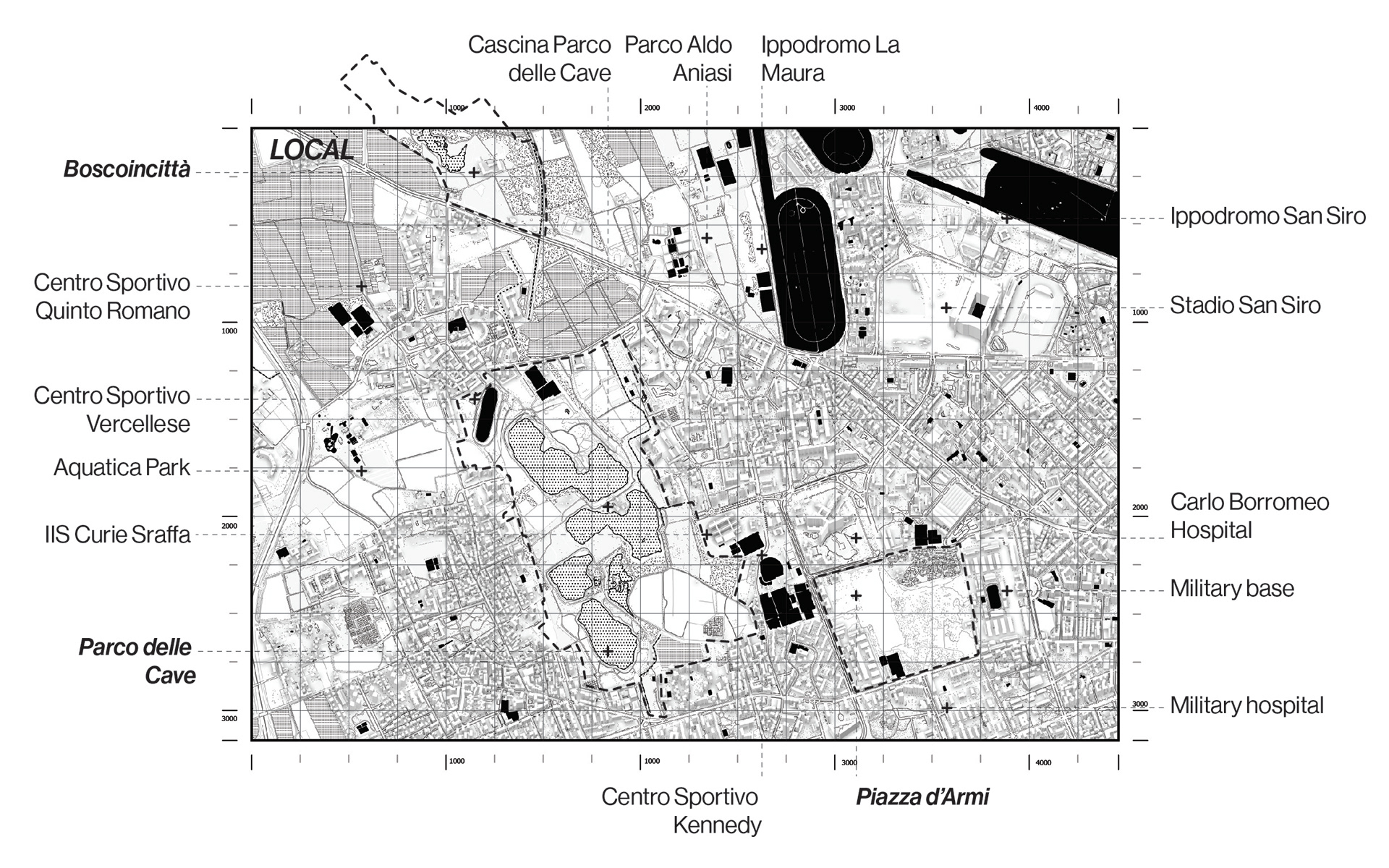
In a postmodern urban setting, the city of Milan faces the challenge of its green areas being in distress by the expansion of urban sprawl. Milano’s landscape has changed drastically, and it is in its peri-urban regions where the constant battle between environmental conservation and urban development struggles to find a balanced symbiosis on the territory. In the western reaches of Milan, the swiftly urban transformation in the XX century left a multeity of fragmented clusters. Urban artifacts, such as housing and service buildings, open space parks and the remnant forested patches are perceived as disjointed elements within an urban fabric which composition portraits a complex matrix of overlayered landscapes.
According to this urban framework and our survey, Boscoincittá, Parco Delle Cave and Piazza d’Armi are considered ecological hotspots, which play the role of green surfaces in this fragmented urban matrix. Nowadays, these ecological clusters have a high heritage, identity, and cultural significance for the territory, not only because of their hosting capability for wildlife, but also for their sprawl and disposition over time to the immediate surroundings. However, it is readily apparent that these systems are far from being an interconnected network of green spaces, despite the constant efforts of multiple entities for preserving and boosting its ecological value.
The interplay between communities and their social practices with green and open spaces have gained relevance in the last decades, prune to safeguard the ecosystem services provided by them. This fact portrays the importance of social actor’s management in a local-suburban scale, but also exposes the lack of a policy proposal of a bigger green space network by the Milan Administration over the last 30 years. Piazza d’Armi, an abandoned enclosed square where the spontaneous greenery had transformed the area from inside, is recognized as a potential open free space that, once opened to the city, could generate a remarkable increase in the quality of life of the community. In addition, this green discontinuity is caused by urban clusters such as infrastructure services (hospital and schools) or sports facilities.
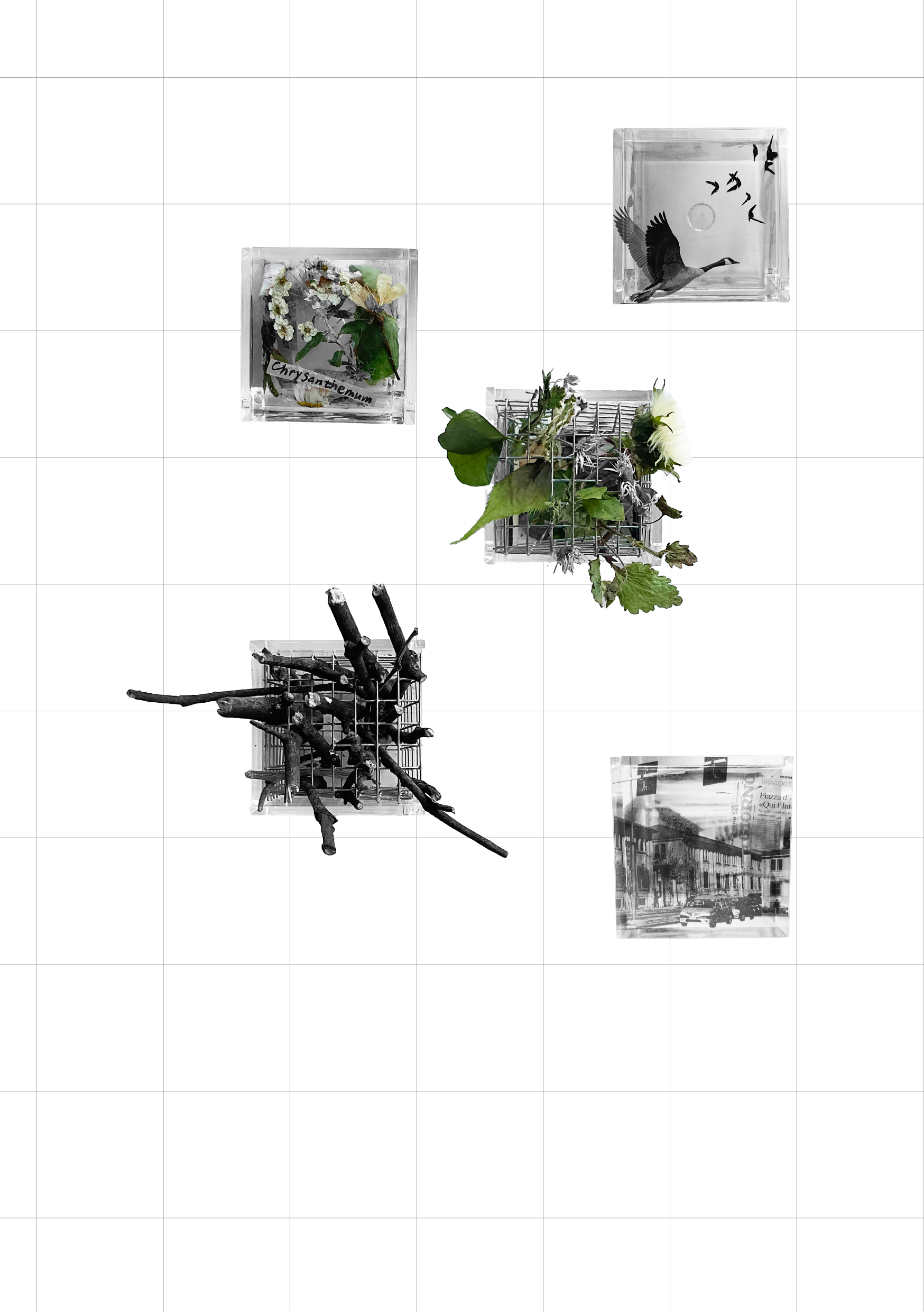
THE CABINET OF WONDERS
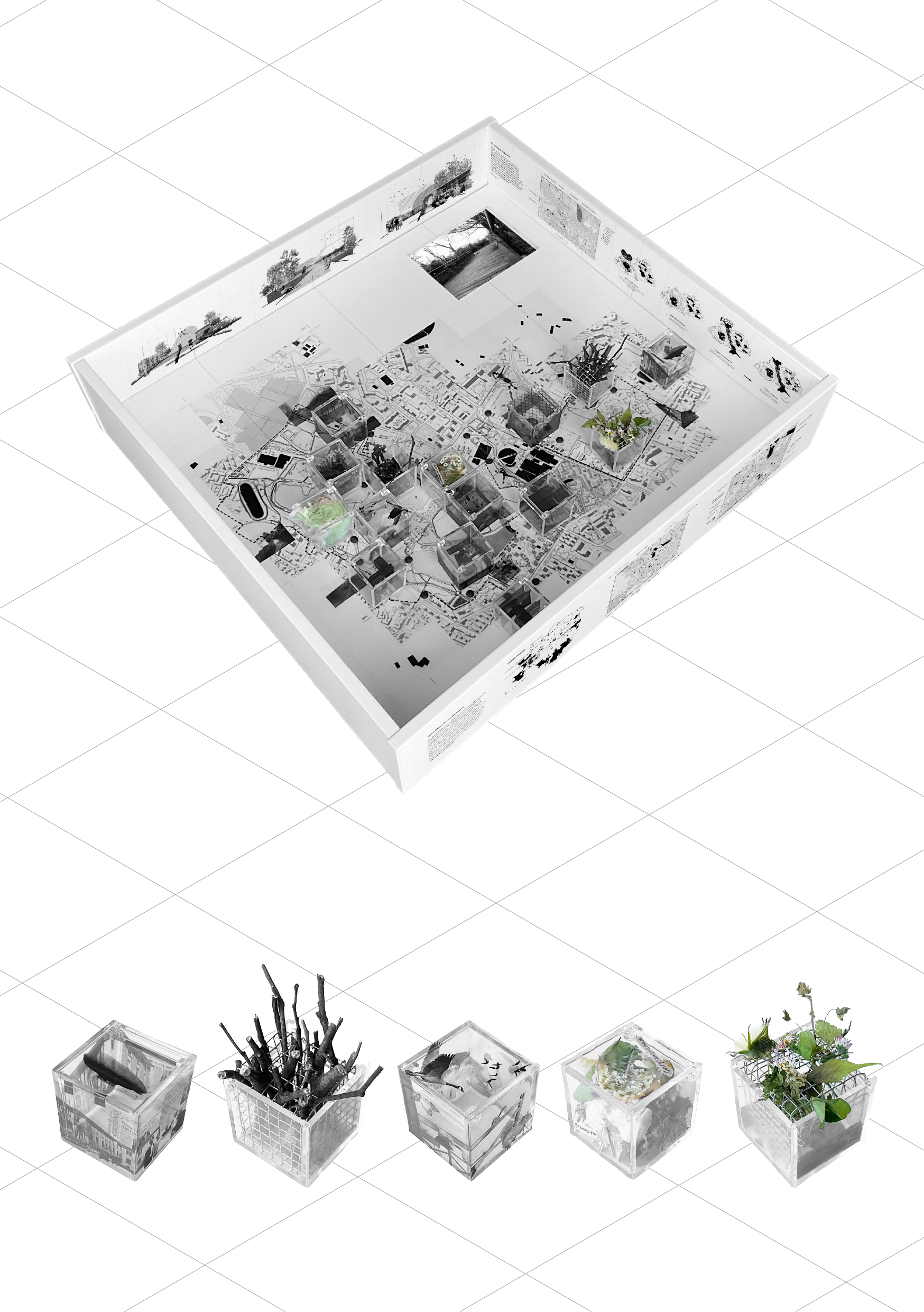
The box – Exploring the different artifacts between the territory.
The cabinet is a series of interlaying layers (like the territory composition) in which the observer will find three different kinds of elements : The borders, ( with the 3 narratives that we proposed) , The artifacts (that are a elements find inside the territory depicting different situations) and finally the video (to show the dynamics of the day to day life in the area).
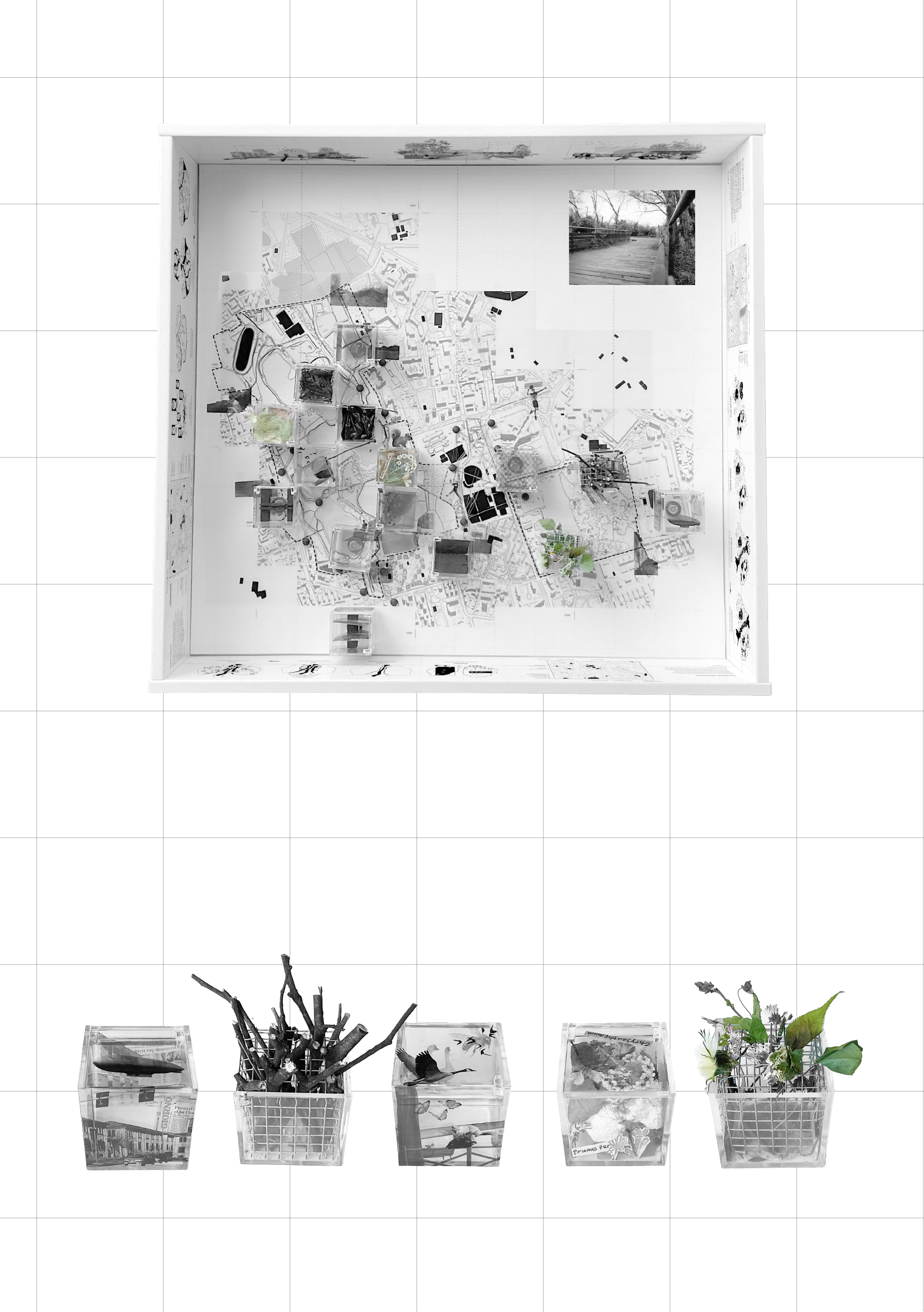
The borders – Describing the narratives identified in the area.
The box walls has 3 narratives and the drawings that concludes each one of them in the final wall. The observer has to start reading first the ‘Connecting with ecotones’, then ‘Creating identity’ and finally ‘ecological network’. At the end the collages explore ‘the future’ identity for the park.
The artifacts – Representing the realities and perceptions of the area.
The territory presents a series of elements that we divided by topics (see our narratives) and each one of these produced artifacts that explores in different ways the territory. For example, you can see the borders, the biodiversity, the associations and many more.
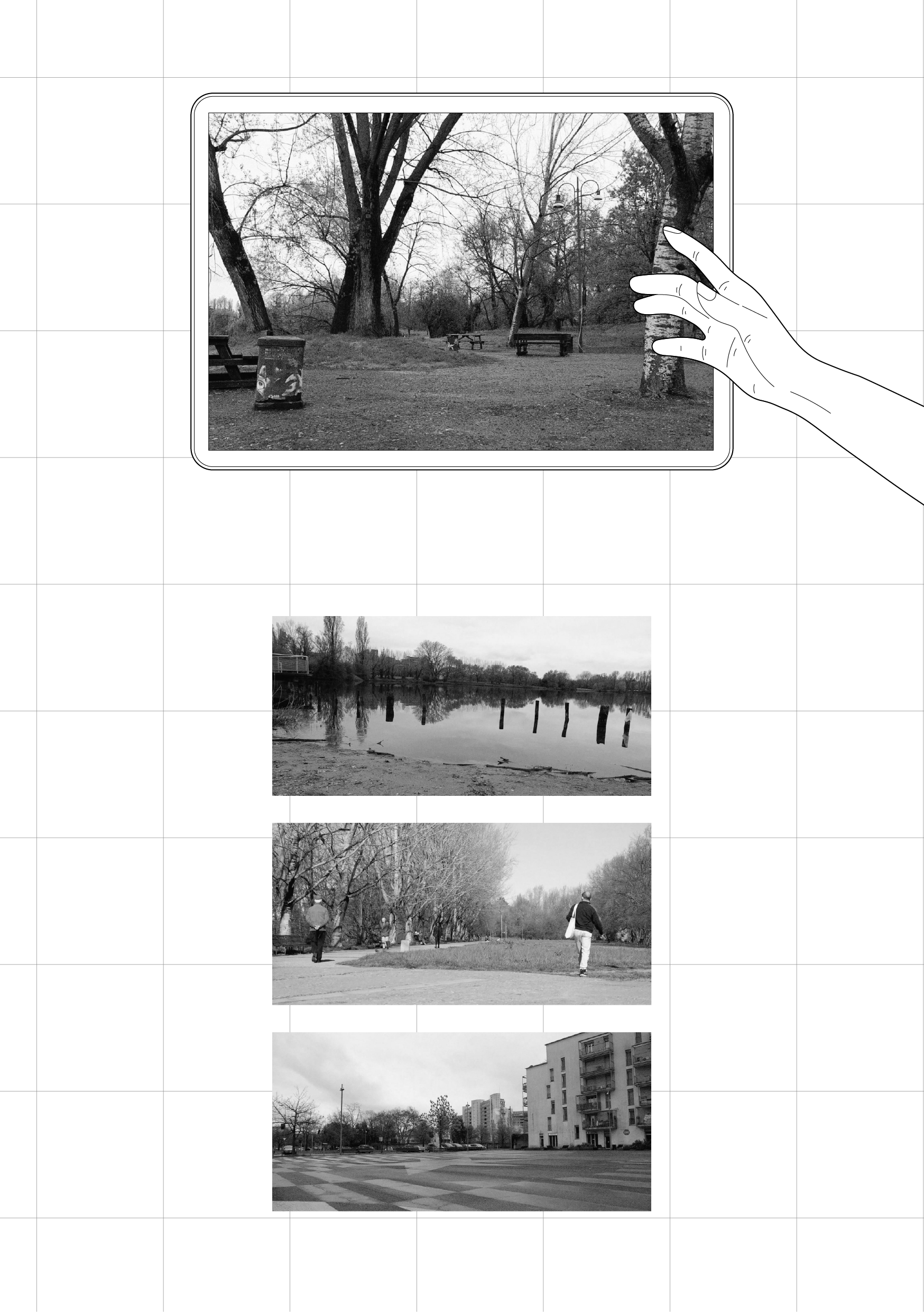
The video – Showing the reality of the spaces.
The different frames of the video shows the daily life of the area, you can see and hear dynamics of the people, elements, animals, plants and many more.
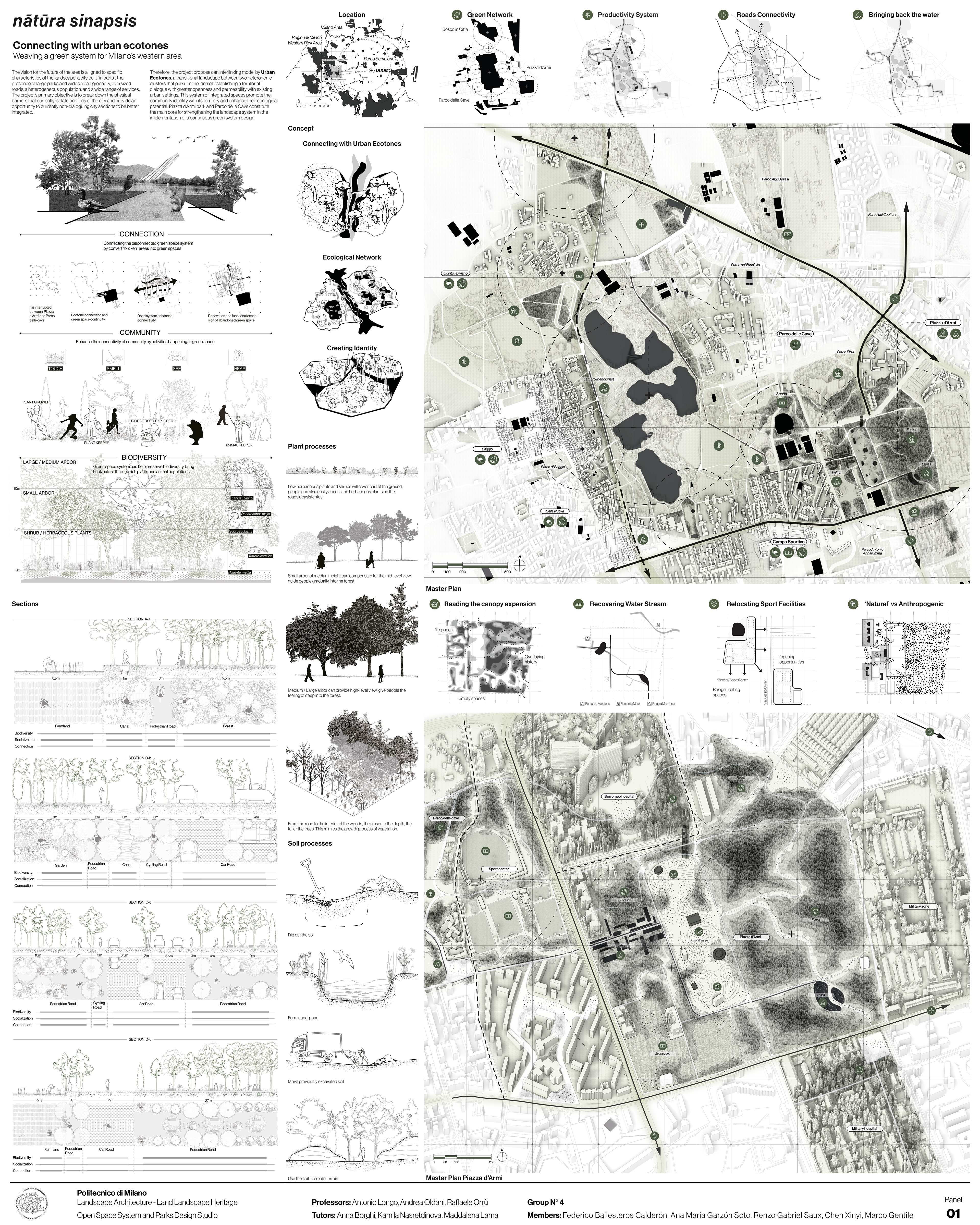
nātūra sinapsis
Connecting with urban ecotones
Weaving a green system for Milano’s western area
The vision for the future of the area is alligned to specific characteristics of the landscape: a city built “in parts”, the presence of large parks and widespread greenery, oversized roads, a heterogeneous population, and a wide range of services. The project’s primary objective is to break down the physical barriers that currently isolate portions of the city and provide an opportunity to currently non-dialoguing city sections to be better integrated.
Therefore, the project proposes an interlinking model by Urban Ecotones, a transitional landscape between two heterogenic clusters that pursues the idea of establishing a territorial dialogue with greater openness and permeability with existing urban settings. This system of integrated spaces promote the community identity with its territory and enhance their ecological potential. Piazza d’Armi park and Parco delle Cave constitute the main core for strengthening the landscape system in the implementation of a continuous green system design.
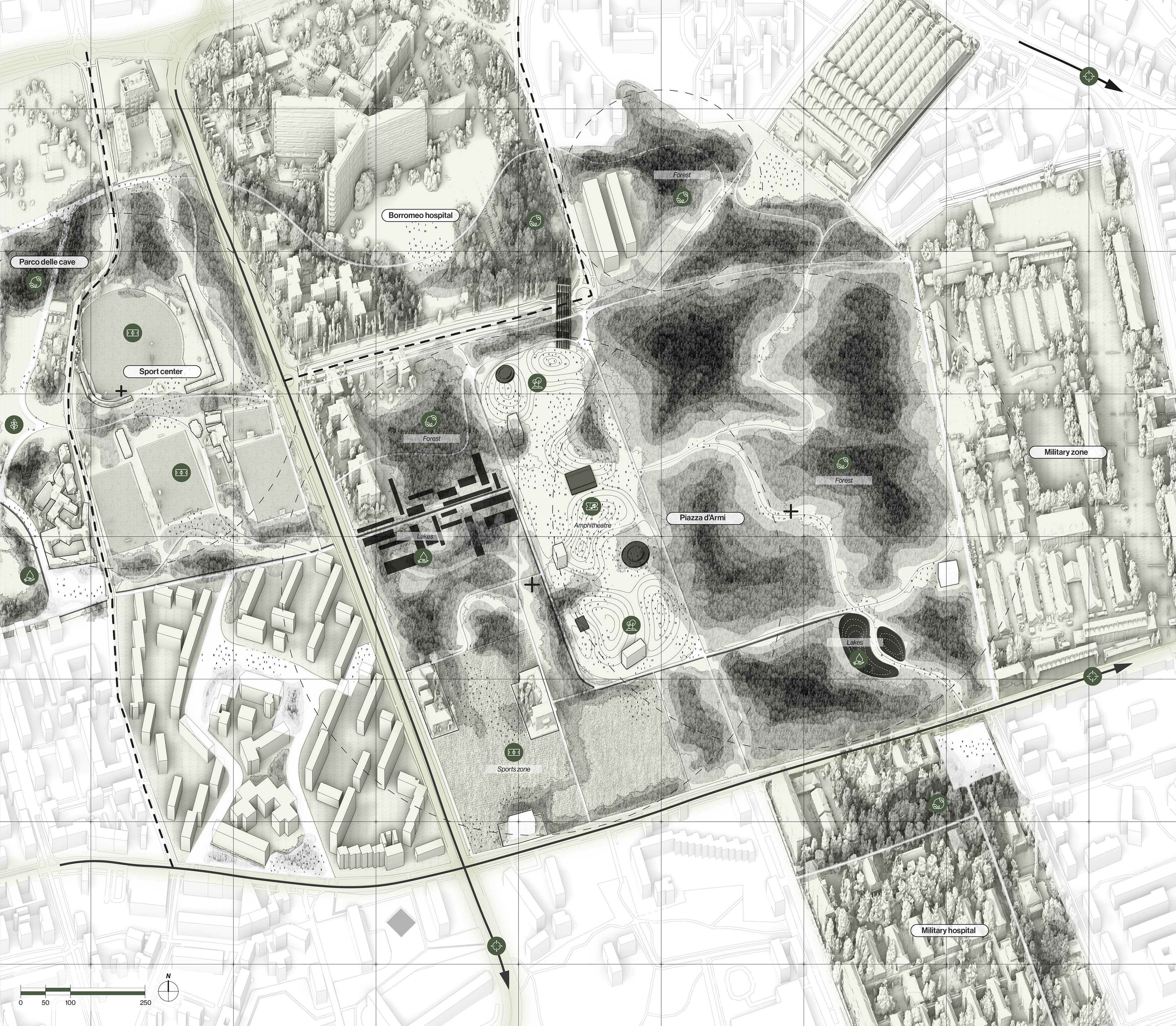
Piazza d’Armi
The new vision of the park
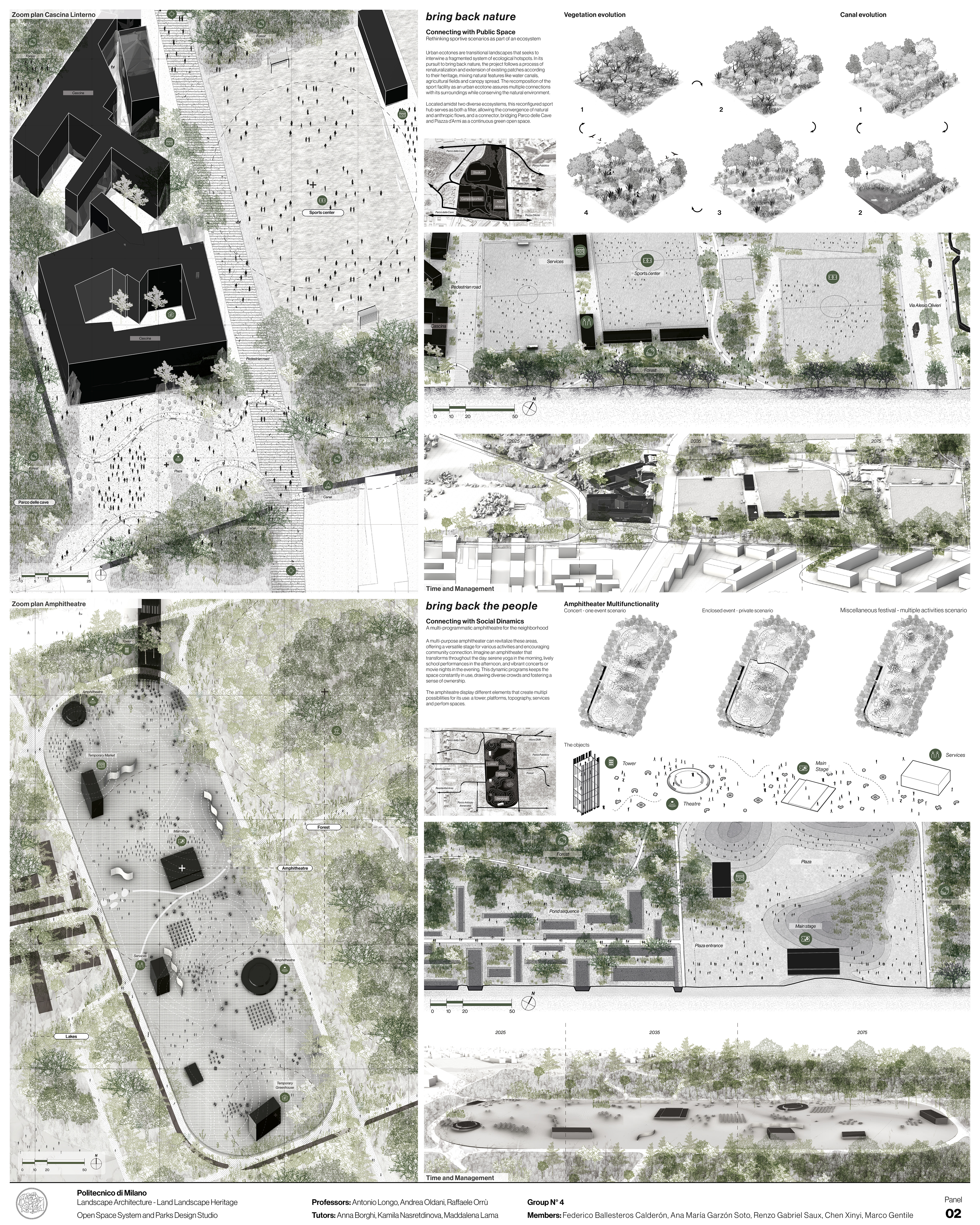
The primary goal of our intervention is to view the park as an integrated system. To achieve this, we have devised several strategies, beginning with the relocation of the sports center to facilitate the connection between Parco delle Cave and Piazza d’Armi. This connection will be both natural and human-made, aiming to foster a variety of activities for people moving through the project.
In Piazza d’Armi, several strategies are proposed, dividing the area into two clearly defined sections: the natural area and the anthropogenic area. The natural section aims to preserve and enhance the existing vegetation with new species that encourage growth. Conversely, the anthropogenic section focuses on restoring the water network and constructing a new sports facility for the community.
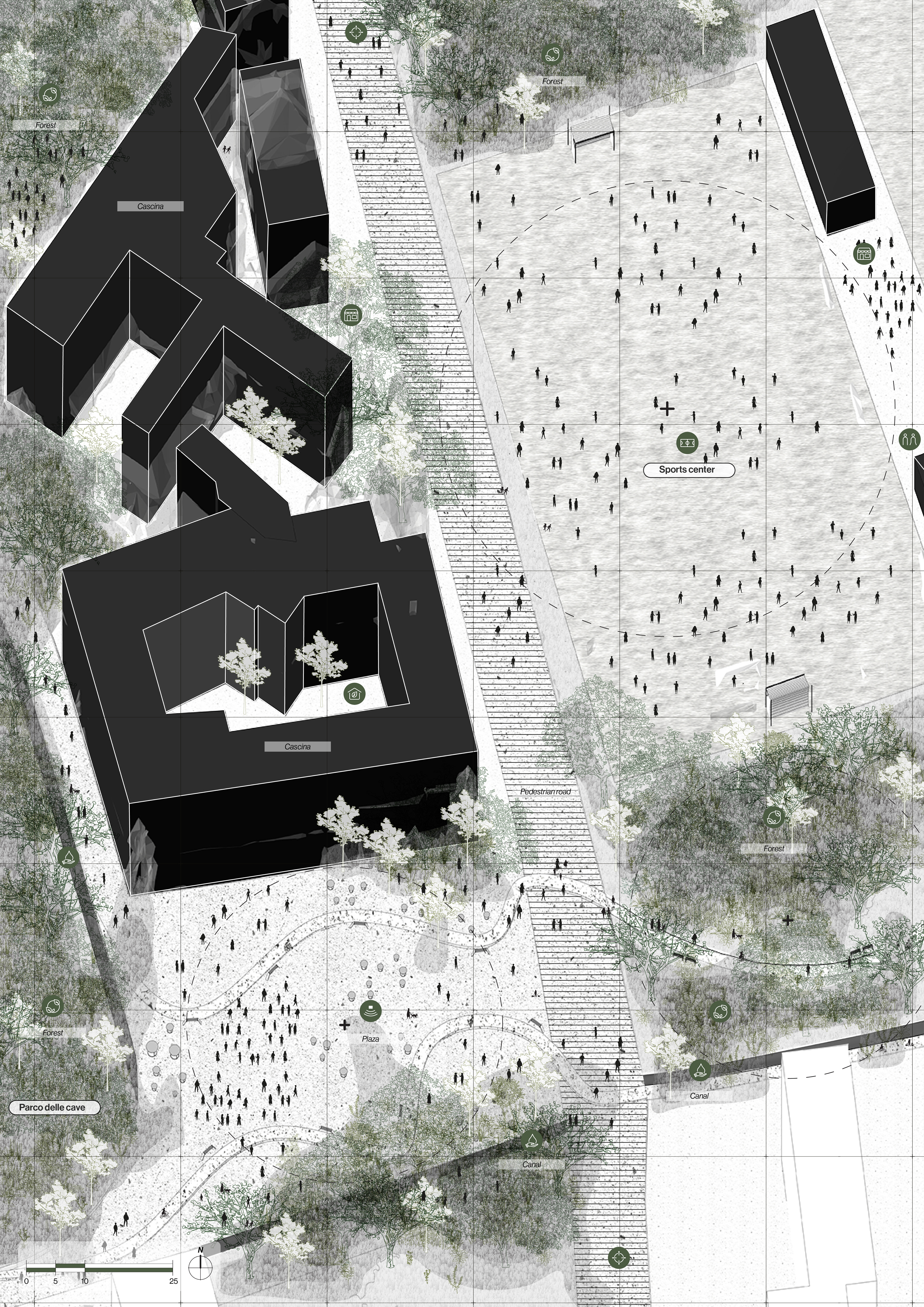
The Cascina area serves as a cornerstone in our project, positioned at the nexus between Parco delle Cave and Piazza d’Armi. Here, we envision relocating select components of the sports center to pave the way for fresh activities that harmonize with both nature and human interaction. Our approach involves introducing new pedestrian paths, revitalizing existing canals, establishing new forested zones, and creating vibrant squares conducive to cultural and social gatherings.
Furthermore, facilitating connectivity not only within the park system but also with the urban landscape is paramount. To accomplish this, our proposal includes pathways within residential developments, adjustments to road layouts to prioritize pedestrian safety and accessibility, and the incorporation of greenery within architectural structures.
In conclusion, our goal is to break down both physical and mental barriers. As such, the project envisions the sports center as an open space, facilitating interaction among people and inviting biodiversity to thrive. This approach encourages interactions among the diverse stakeholders within the area.
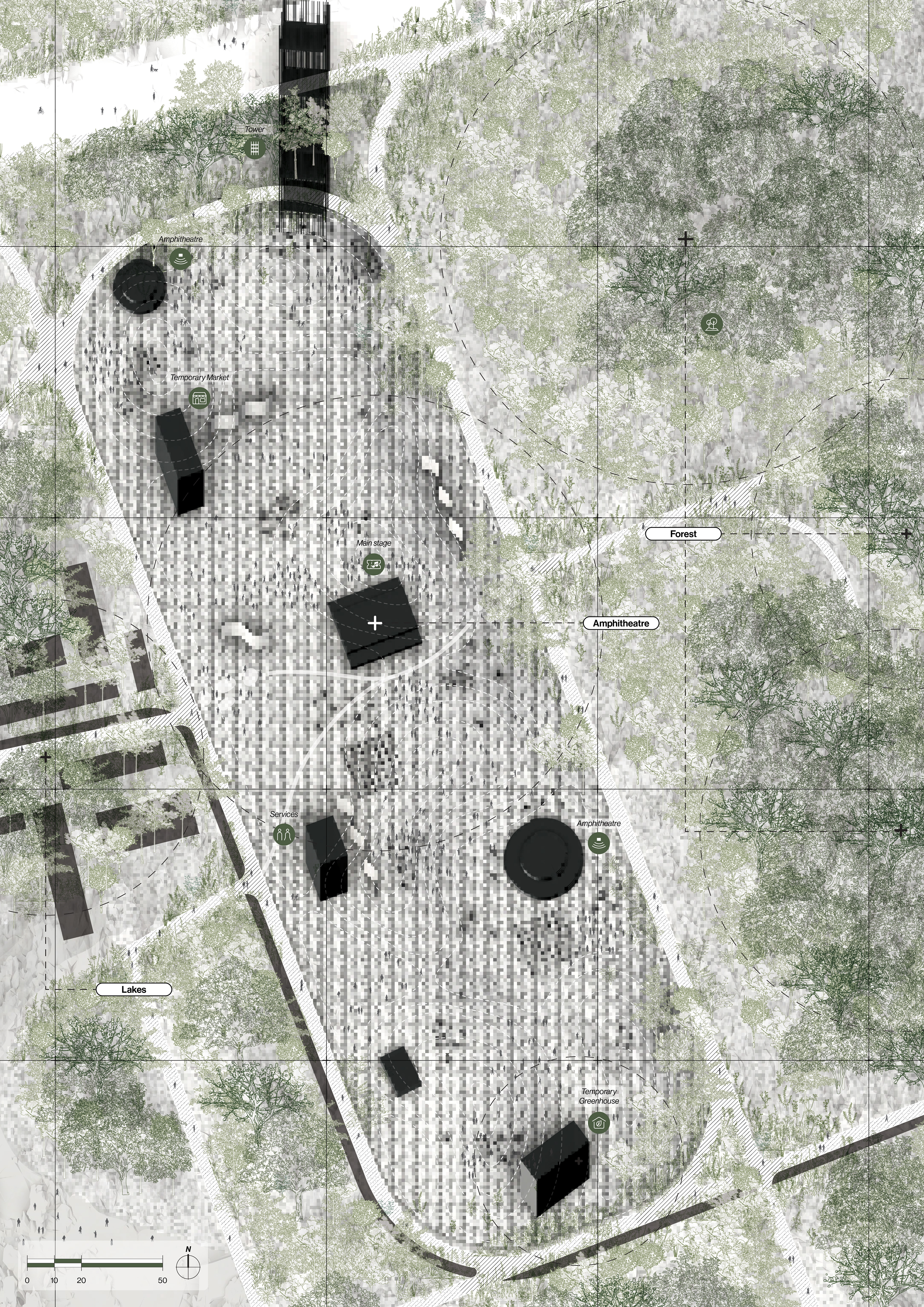
The redesigned Piazza d’Armi is clearly delineated into two main sections: the natural and anthropogenic areas. Visitors first arrive at the anthropogenic section, where they encounter a network of lakes and ponds guiding them towards the central area housing the amphitheater. Within this amphitheater space, diverse amenities cater to a multitude of activities, tailored to the interests of the community.
After exiting the amphitheater, visitors enter the forested area where narrow pathways meander through the woods, inviting exploration of its rich biodiversity. Moreover, threading through this woodland, a network of waterways originating from Bosco in Città culminates in a grand lake nestled within the forest.
Finally, the park boasts multiple entrances, ranging from quaint footpaths to expansive plazas, ensuring convenient access from all directions.
PANELS
BOOKLET